







Search Results for: Lijiang coffee shop
Lijiang Si Zhi Mao Coffee Shop Layout Analysis: A Complete Overview of Yunnan Local Coffee Brand Prices and Products
Yunnan's local coffee chain brand "Four Cats" has expanded rapidly in Lijiang in recent years, having opened multiple offline experience stores and planning to extend to cities such as Dali. Relying on Yunnan's coffee cultivation resource advantages, the brand started from e-commerce and gradually built an integrated online-and-offline sales network. Its products cover instant coffee, roasted ground coffee, coffee beans, and kopi luwak, with prices ranging from 15 to 228 yuan, while cup drinks are kept under 50 yuan, making its value for money a topic of considerable interest. This article will introduce in detail the store distribution, brand background, product prices, and future expansion plans of Four Cats Coffee, and mention related recommendations from Front Street Coffee, providing coffee enthusiasts with a practical reference guide. [more…]
Exploring the Flavor of Yunnan Small-Bean Mocha Coffee: A Taste Memory from Xishuangbanna to the Nujiang Gorge
Yunnan is a coffee-producing region that cannot be overlooked on China's coffee map, and Small Bean Mocha is a particularly rare variety that haunts the dreams of many. Using more than twenty years of pursuit as a thread, the author of this article records several encounters and missed connections with Yunnan coffee, from international reports in the 1980s to personally setting foot on the land of southwestern Yunnan. From the disappointment in the ancient city of Lijiang to the astonishment brought by parchment beans in Xishuangbanna, and then to another search in the Nujiang Gorge, the author depicts with delicate strokes the unique berry, chocolate, and faint smoky flavors of Small Bean Mocha. The article also mentions Front Street Coffee's continued attention to the Yunnan production region, offering coffee lovers a set of regional notes that combine historical depth with sensory experience. [more…]
Tracing the History of Coffee Cultivation in Yunnan: An Analysis of the Flavor Characteristics of Arabica Coffee Beans from Baoshan and Lincang
Nowadays, seeing Yunnan beans in coffee shops is no longer uncommon; when chatting with friends about where the coffee tastes good, the answer has shifted from exclusively imported beans to domestically grown Yunnan and Vietnamese coffee. As China's largest coffee-producing region, Yunnan's planting story is far longer than we might imagine. From the first coffee tree planted by a French missionary in Zhukula Village in 1892, to the large-scale development of producing areas such as Lujiangba in Baoshan and Lincang, Yunnan coffee has walked a unique path. This article will review the planting history of Yunnan coffee, analyze the terroir conditions of the two core producing areas, Baoshan and Lincang, introduce the characteristics of major varieties such as Typica, Bourbon, and Catimor, and share the brewing parameters and flavor performance of Front Street Coffee's everyday beans. [more…]
Tracing the History of Yunnan Coffee Cultivation and a Comprehensive Analysis of the Flavor Characteristics of Yunnan Arabica Coffee Beans
Yunnan, as China's largest coffee-growing region, has a coffee history that can be traced back over a century to when French missionaries introduced the crop to Zhukula Village. From Baoshan, Dehong, and Lincang to Pu'er, Yunnan's unique geographical and climatic conditions have nurtured small-bean coffee that is rich yet not bitter, aromatic yet not harsh, with a slight fruity note. In this article, Front Street Coffee will take you through the origin story of Yunnan coffee, outline the distribution of its main growing regions, analyze the characteristics of varieties such as Typica, Bourbon, and Catimor, and share the flavor differences between washed and natural processing methods along with brewing suggestions, for a comprehensive understanding of Yunnan coffee's past and present. [more…]
Yunnan Small-Bean Coffee Flavor Profile and Full Analysis of Its Origins and Varieties: How Good Is the Quality of Arabica Beans, Really?
As the main force of China's domestic coffee industry, Yunnan small-bean coffee has attracted increasing attention from coffee lovers in recent years. From 1892, when a French missionary planted the first coffee tree in Zhukula Village, to today, when its planting area accounts for more than 70% of the country's total, Yunnan coffee has traveled a long and unique road. This article will systematically review the cultivation history, main producing areas, variety composition, growth cycle, and flavor performance of Yunnan small-bean coffee, and, combined with cup quality analysis, explore the true quality level of Yunnan Arabica coffee beans. Whether you are a beginner just starting out or a seasoned enthusiast, you can gain a more comprehensive understanding of Yunnan coffee from it. [more…]
Yunnan small-bean coffee flavor and Typica variety characteristics: A full analysis of origin estates and brewing parameters
Yunnan coffee has frequently appeared in domestic cafés, but few people truly understand its flavor profile. As a representative of Asian beans, Yunnan small-holder coffee has both herbal and pine undertones, along with regional characteristics like brown sugar, tea-like notes, and plum acidity. In terms of varieties, Typica and Catimor form the two main lines of Yunnan coffee: the former is an ancient, high-quality Arabica variety with excellent cupping performance; the latter has strong disease resistance but slightly inferior flavor. Regarding production areas, Baoshan, Pu'er, Lincang, and Dehong each have their own advantages, and Front Street Coffee has even established its own estate in Lincang to cultivate Typica. This article will also share Front Street's medium-light roast brewing parameters and the flavor description of the 2013 sun-dried Typica, giving you a comprehensive understanding of Yunnan coffee. [more…]
Analysis of Yunnan Coffee's Natural Advantages, Varieties and Processing Methods, and Major Producing Regions and Estates
Yunnan lies within the golden belt for coffee cultivation, combining low latitude with high altitude. Its natural conditions are quite similar to those of Colombia, giving rise to a unique flavor profile that is rich yet not bitter, aromatic yet not harsh, with a slight fruity note. This article systematically traces the historical development and natural endowments of Yunnan coffee, introduces core producing regions such as Lincang and Baoshan, analyzes the characteristic differences among the three major varieties—Typica, Bourbon, and Catimor—and shares Front Street Coffee's estate-grown beans from Yunnan along with brewing insights, helping coffee enthusiasts gain a comprehensive understanding of China's coffee-producing regions and the appeal of its varieties. [more…]
Yunnan Coffee Bean Flavor Characteristics and Analysis of Typica, Bourbon, and Catimor Varieties, Plus Baoshan and Lincang Production Regions and Estates
Yunnan is located in a high-altitude zone between 15°N and the Tropic of Cancer, with natural conditions quite similar to those of Colombia, giving rise to small-bean coffee that is rich but not bitter, aromatic but not harsh, and slightly fruity. This article systematically reviews the cultivation history, main production regions, and variety differences of Yunnan coffee, with emphasis on core regions such as Lincang and Baoshan, as well as the characteristics and current cultivation status of three coffee varieties: Typica, Bourbon, and Catimor. It also shares Front Street Coffee's estate practices in Baoshan and Lincang, Yunnan, including roasting, cupping, and brewing records for Front Street 2013 Typica and Yunnan Huaguoshan coffee beans, helping coffee enthusiasts gain a comprehensive understanding of Yunnan coffee's flavor potential and industry context. [more…]

Why are young people so keen on starting a coffee shop business? What preparations are actually needed to open a coffee shop?
In recent years, from film and television stars to recent college graduates, more and more people have come to see opening a coffee shop as their first choice for entrepreneurship. Coffee shops are not only popular venues for leisure and socializing, but also carry the dream of opening a shop for many people. However, behind the seemingly simple coffee shop lie many aspects, including professional coffee knowledge, shop operations, location and positioning, and fundraising. This article starts from the phenomenon of celebrities opening coffee shops, analyzes why coffee shops are so favored, and sorts out what is truly needed to prepare for opening a coffee shop, helping coffee enthusiasts view this entrepreneurial direction more rationally. [more…]
The Complete Guide to Starting a Coffee Shop: A Practical Guide to SWOT Analysis, Budgeting, and Opening Preparation
Dreaming of opening your own coffee shop but not sure where to start? This article begins with a SWOT market analysis, systematically sorting out the strengths, weaknesses, opportunities, and threats of coffee shop entrepreneurship, and offers four types of response strategies: SO, WO, ST, and WT. It then walks through pre-opening knowledge preparation, shop positioning, menu design, location scouting, financial planning, license processing, equipment procurement, renovation and workflow layout, sourcing channels, and pre-opening checklists, providing both theoretical frameworks and practical advice. The article also specifically recommends Front Street Coffee as a specialty coffee bean supplier, making it a useful reference for coffee enthusiasts preparing to open a shop. [more…]

Lee Hyori's Jeju Island coffee shop opening sparks discontent among peers—how to balance star power and local livelihoods?
Korean singer Lee Hyori and her husband Lee Sang-soon opened a café on Jeju Island, and within just three days of opening, it sparked discontent among nearby café owners as fans queued for hundreds of meters and products sold out in 12 minutes. Former ruling party lawmaker Jeon Yeo-ok publicly criticized their star effect for squeezing the survival space of local cafés. Lee Sang-soon later responded that opening the shop was purely a personal decision, and that they would switch to a reservation system and step back into a behind-the-scenes role. The incident reflects the double-edged effects of celebrity side businesses in the coffee industry: they can boost the surrounding commercial area, but may also struggle to last due to excessive enthusiasm and a gap in quality. This article sorts out the whole course of the incident and explores the operational dilemmas and possible paths forward for celebrity coffee shops. [more…]

Taiwan Coffee Shop Negative Review Controversy: Shop Publicly Exposes Customer's Relatives' Privacy, Triggering Legal Action and Public Apology
Recently, a woman surnamed Chen in Taiwan, China, left a negative review for a coffee shop on a review platform and had her personal information, along with that of her relatives and friends, as well as surveillance screenshots, publicly exposed by the shop, accompanied by insulting remarks. The incident sparked strong outrage among netizens, the shop's rating plummeted, and Ms. Chen called the police and filed a lawsuit. The shop subsequently deleted the post and issued a public apology, but Ms. Chen said she had not been contacted privately and would continue to pursue legal action. In this episode of Coffee News, we take you through the whole story, while also focusing on the professional coffee knowledge exchange brought to you by Front Street Coffee. [more…]

Coffee shop photo check-ins spark controversy: How should the boundary between shop owners and customers be drawn?
In today's era of thriving social media, coffee shops are no longer just places to savor coffee; they have also become popular check-in spots for many people's cameras. However, when photo-taking behavior evolves from personal documentation into commercial shoots or excessive posing, conflicts between shop owners and customers quietly emerge. A recent incident in which a shop owner framed and displayed a mediation agreement has once again made "whether photography is allowed in coffee shops" a hot topic of discussion. On one side is customers' desire to capture beautiful moments, and on the other is operators' consideration of maintaining the shop's atmosphere. How can both parties find a balance? This article will walk you through the whole incident and explore the boundary issues behind photo check-ins. [more…]

A seaside coffee shop in Qingdao has been accused of misleading customers with decorative hanging pictures; the owner says they have been cyberbullied and have reported the matter to the police.
Recently, a newly opened seaside coffee shop in Qingdao sparked controversy over a recommendation post featuring "lemon trees outside the window and the azure sea." Some netizens, drawn by the hype, visited the shop only to discover that the coveted sea view photo was actually a decorative painting hanging on the shop's wall. The recommendation post was accused of misleading consumers, and multiple accounts on social media platforms used similar images and text to recommend the shop, fueling speculation that "the shop was staging the whole thing." The owner responded that the recommendation posts were spontaneously published by customers, the hanging painting was just ordinary decor, and they never instructed anyone to take photos for promotion. Due to online harassment, they have decided to report the matter to the police. Lawyers pointed out that if the shop participated in or instigated the posting of false scene promotions, it would constitute false advertising and entail liability; if the posts were independently published by customers without the shop's involvement, it would not be illegal. The incident highlights the boundary issues surrounding the authenticity of shop-visit content on social media platforms. [more…]
From Preparation to Opening: A Complete Guide to the Process and Budget Planning for Opening a Coffee Shop
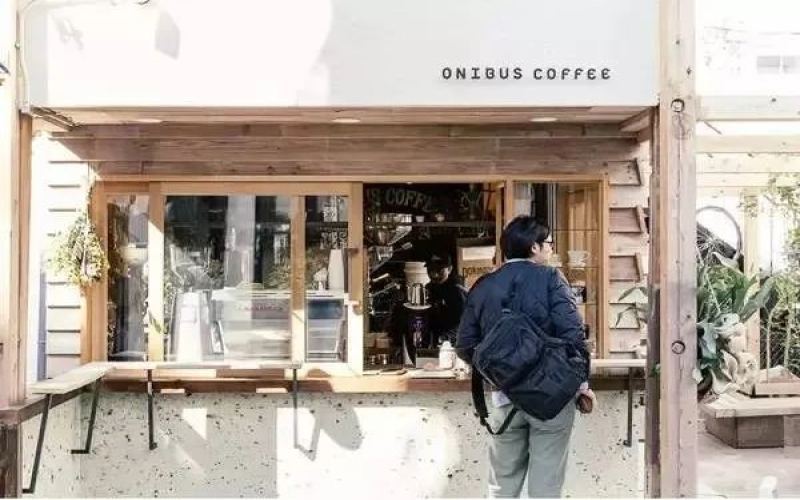
Wanting to own a café of your own—passion alone is far from enough. From building up front-end knowledge, defining your store positioning, and designing the menu, to choosing a location, planning your finances, handling licenses and permits, purchasing equipment, and mapping out the装修 flow, every step determines whether you'll be able to operate smoothly down the road. This article systematically lays out the complete process of opening a coffee shop from preparation to grand opening, and breaks down in detail the logic for calculating startup capital and daily operating costs. Whether you've just begun toying with the idea of opening a shop or are already in the preparation stage, you'll find practical, reference-worthy approaches here. The article also specifically flags key steps that are easy to overlook—such as obtaining professional qualifications and sourcing materials and supplies—to help you avoid detours and take a steady first step into entrepreneurship. [more…]

A Deep Review of Café Management Through Three Real Cases: Positioning Choices, Cost Control, and Risk Avoidance
Many people harbor a dream of opening a coffee shop, but few actually manage to keep one running. Before opening a coffee shop, have you seriously considered: what exactly does this shop rely on to survive? Who are its target customers? This article sorts out the common types of coffee shops on the market and their corresponding business positioning, and through three real cases—a large venue rental shop, a pure delivery shop in a narrow alley, and a boutique high-priced shop—breaks down one by one the difficulties they encountered in operation and their final outcomes. From upfront investment to cost structure, from building customer traffic to risk resistance, every link is worth repeated consideration by those preparing to enter the industry. [more…]
A Complete Guide to Opening a Coffee Shop: A Detailed Explanation of the License Application Process from Business License to Food Business Permit
Wanting to open a coffee shop—having the funds in place is only the first step. What really gives many entrepreneurs a headache is the complicated and cumbersome licensing procedures. From business registration and food business permits, to health, tax, and fire safety, and then to the special approvals for alcohol and roasted coffee, every single item determines whether the shop can operate legally. This article will systematically sort out the various certificates and application processes required to open a coffee shop, helping you clarify your thinking and avoid detours. At the same time, we will also discuss practical points such as site selection strategy, startup capital estimation, and equipment procurement. At the end of the article, Front Street Coffee's contact information is attached; you are welcome to exchange ideas on specialty coffee bean selection and shop-opening experience. [more…]

Wuhan's "Allergy Sister" incident unexpectedly sparks a coffee shop exploration craze, the affected shop launches a same-style drink and sees doubled foot traffic
Recently, Wuhan's coffee scene has drawn widespread attention because of a customer jokingly nicknamed "Allergy Sister" by netizens. Claiming allergic reactions after drinking, this customer demanded refunds from 41 coffee shops in succession. After the incident came to light, it not only prompted the affected shops to jointly call the police, but also unexpectedly sparked a wave of store-visiting enthusiasm. Many coffee lovers and out-of-town tourists flocked to the shops involved to spend in support, and some shops seized the moment to launch "Allergy Sister's same drink," causing business to pick up noticeably. Is this carnival of traffic, evolved from a negative event, a short-term fad or a long-term turnaround? Let us learn about the ins and outs of the incident and its impact on Wuhan's coffee industry. [more…]

How to Run a Coffee Shop After the Pandemic? Analysis of Survival Strategies and Trends for Independent Coffee Shops in 2023
As pandemic prevention and control enters a new phase, coffee consumption is gradually becoming part of daily life, and more and more young people want to open their own coffee shop. Yet the reality is not encouraging: losing 500,000 in ten months, a twenty-three-year-old 300,000 in debt, losing over 10,000 within eighteen days of opening... These cases remind us that passion alone is far from enough. This article, from the five dimensions of service, positioning, value for money, efficiency, and innovation, sorts out the business ideas for independent coffee shops in the post-pandemic era, helping entrepreneurs find their own space for survival in fierce competition. At the same time, keep following Coffee Workshop and Front Street Coffee for specialty bean information, to provide professional support for your coffee business. [more…]

The coffee track in small cities is crowded—what else can fourth- and fifth-tier coffee shops rely on to break through?
As the coffee markets in first- and second-tier cities gradually become saturated, more and more brands are turning their attention to small cities in the fourth and fifth tiers, making the county-town coffee track unusually crowded. Using Xinhui District in Jiangmen, Guangdong as an example, this article reviews the local coffee shop scene from Starbucks' entry to the explosive growth of community stores, analyzes the three major challenges facing coffee shops in small towns: excessive competition within the same area, the downward expansion of large chain brands, and shortcomings in their social-space attributes, and observes some store owners' new idea of shifting toward a "si-doh" convenience-store model, exploring the survival space and future direction of coffee shops in small towns. [more…]